-
Main function: Long-term external lubricant with mild internal lubrication, narrow molecular weight & carbon chain distribution, ultra-low thermal weight loss, providing stable lubrication in early, middle and late extrusion stages.
-
Benefits: Reduce extruder torque, improve mold release, minimize die plate-out, boost profile surface gloss, disperse calcium carbonate & titanium dioxide evenly, raise extrusion output, widen processing window.
-
Typical dosage: 0.3–0.6 PHR for standard PVC window & door profiles; 0.5–0.8 PHR for high-filled high-speed extrusion lines.
-
Usage: Directly added in high-speed mixing compounding system, pre-disperse with PVC resin, fillers and stabilizers under controlled temperature.
-
I. Core Action Mechanism
Polyethylene wax (PE wax) is a long-acting external lubricant with mild internal lubricating performance, which meets the full-process lubrication requirements of PVC twin-screw extrusion:
External Lubrication (Core Function)
PE wax features low polarity and poor compatibility with PVC resin. After melting, it migrates to the metal interface between melt, barrel, screw and die lip, forming a uniform isolating lubricating film. It greatly reduces friction between melt and metal, achieves effective mold release and anti-sticking effect, and lowers risks of die buildup and material degradation caused by scorching.
Long-Lasting Lubrication in Middle and Late Stages
It has a softening point of 100–117 °C, concentrated molecular weight distribution and ultra-low thermal weight loss, delivering stable lubrication throughout high-temperature extrusion. Unlike paraffin wax which volatilizes easily at low temperature and only provides early-stage lubrication, PE wax continuously takes effect at the middle screw section and die sizing section, realizing balanced lubrication covering the early, middle and late processing phases.
Auxiliary Mild Internal Lubrication
A small amount of PE wax intercalates PVC molecular chains to reduce internal friction of the melt, moderately lower extruder main torque, cut shear heat generation and improve the uniformity of melt flow.
Dispersion of Fillers & Colorants
It wets inorganic fillers such as calcium carbonate and titanium dioxide, eliminates filler agglomeration and surface pitting on high-filled profiles, and enhances surface smoothness and gloss of finished products.
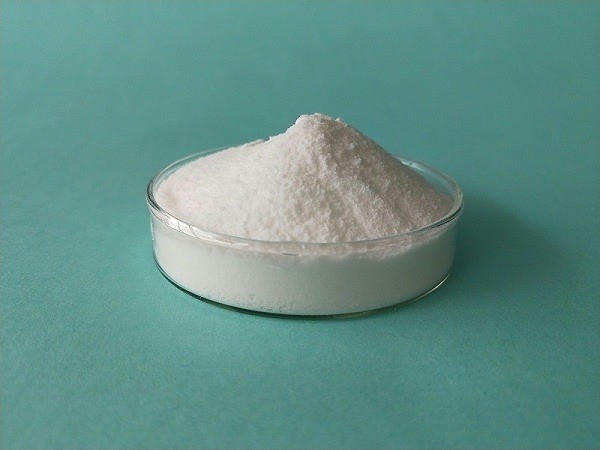
Polyethylene Wax Powder
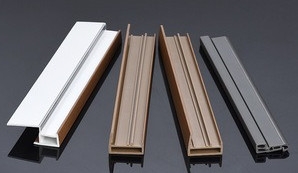
Finished PVC Profiles
II. Five Practical Advantages in PVC Profile Formulations
Stabilize Extrusion & Boost Production Capacity
It reduces fluctuations of main motor current and torque, allows higher screw rotation speed and lifts extrusion output by 10%–18%. It inhibits local overheating from shear, widens the processing temperature window and adapts to high-speed extrusion production lines.
Improve Surface Quality of Profiles
It eliminates melt fracture, scratches and mottling for a high-gloss, smooth profile surface. It reduces blooming and migration, prevents yellowing of white profiles, and exerts negligible negative impact on light transmittance of transparent profiles.
Cut Equipment Wear & Reduce Downtime for Cleaning
It continuously isolates melt from metal surfaces, drastically alleviates die plate-out and screw coking, extends continuous production duration and lowers the frequency of die and screw cleaning.
Compatible with Low-Cost High-Filled Formulations
In window and door profiles filled with high dosages of calcium powder, it improves filler dispersion, avoids rough inner walls and reduced toughness of profiles, and balances lubrication without delaying plasticization.
Synergize with Heat Stabilizers to Reduce PVC Degradation Risks
It barely volatilizes at high temperatures with low thermal weight loss, and has no incompatibility with calcium-zinc or lead salt stabilizers. It suppresses yellow discoloration and black streaks caused by hydrogen chloride removal from PVC during processing.
III. Standard Dosage (PHR, Parts per Hundred Resin)
-
Conventional white window & door profiles (calcium-zinc stabilization system): 0.3–0.6 PHR (0.3%–0.6%)
-
-
High-filled & high-speed extruded profiles: 0.5–0.8 PHR
-
-
In finished composite stabilizers: PE wax accounts for 10%–20% of the stabilizer formula
-
-
Supporting filler masterbatch: 5%–10% used as dispersion and lubrication carrier
-
Note: Excessive addition leads to over-external lubrication, insufficient plasticization, profile delamination and decreased impact strength. It needs to be compounded with oxidized polyethylene wax (OPE wax) and calcium stearate to balance internal and external lubrication.
IV. Processing Application Methods
Direct Addition in Main Material Mixing (Mainstream Process)
Feed PVC resin, calcium powder, stabilizer and PE wax into a high-speed mixer, heat up to 110–120 °C for sufficient pre-dispersion, then cool down below 40 °C before discharging. Control mixing temperature and duration to ensure wax evenly coats filler and resin particles.
Addition as Composite Stabilizer Carrier
Blend PE wax with stearate salts and antioxidants for granulation to form an integrated lubrication-stabilization system, which facilitates feeding and delivers more uniform lubrication.
Modification of Recycled PVC Profile Materials
Increase PE wax dosage in recycled material formulas to improve fluidity and surface gloss of reprocessed materials, and offset deteriorated processing performance induced by degradation of recycled PVC.

 Application of PE Wax in PVC Profiles